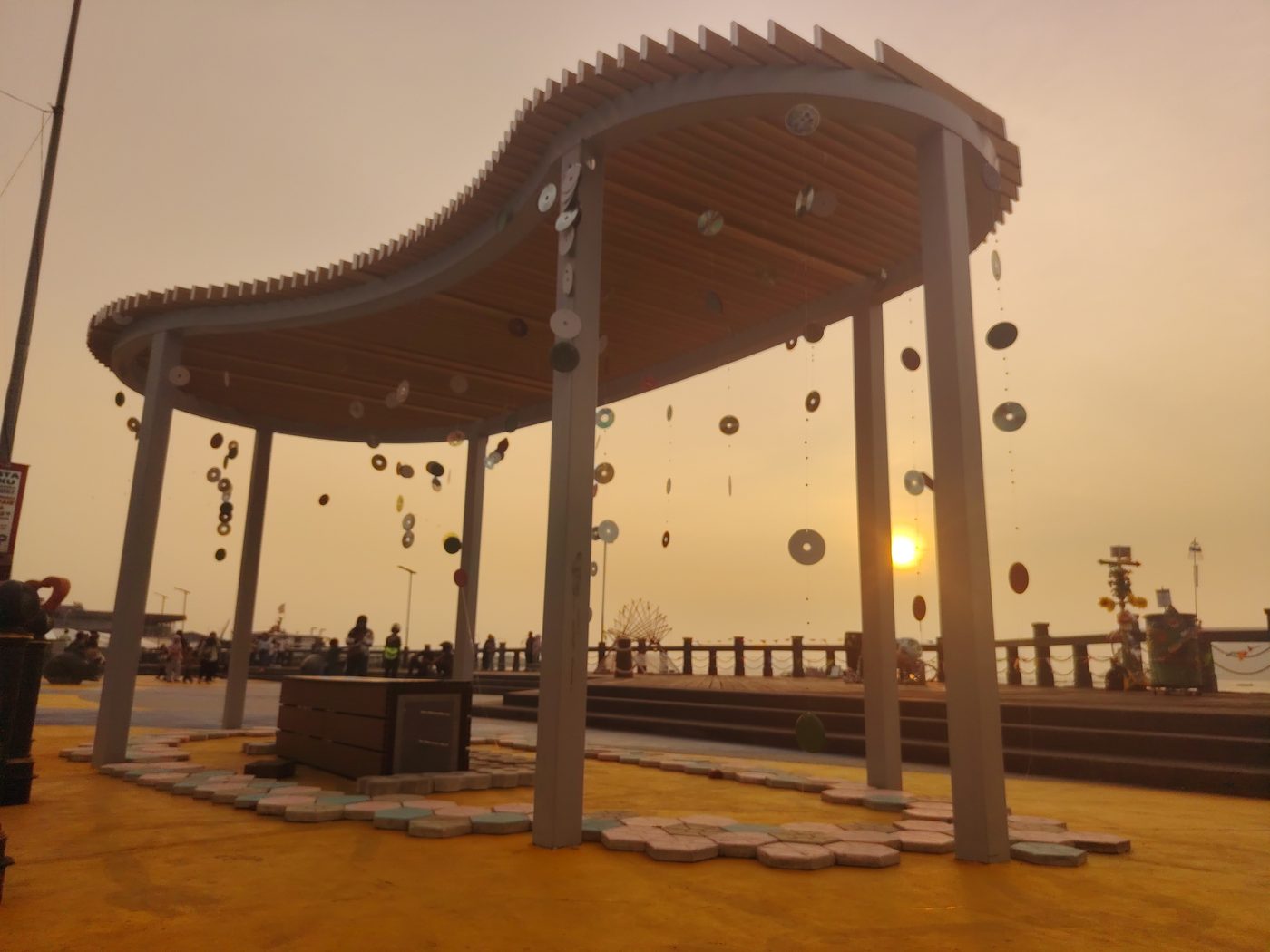
The 13th Installation Art Kota Kinabalu ran from 16 to 20 September 2026 on the Segama Waterfront Boardwalk. Our piece was called What The Tide Give Back, and it was made from the same waste we pull out of the water every month.
The floor was laid with eco pavers, hexagons and squares cast by hand. Overhead hung strings of discs we call raindrops, made from coasters and salvaged CDs, so that the whole structure moved and caught the light when the wind came off the sea. Altogether the installation took 316 pieces: 118 hexagon bricks, 20 square bricks, 42 strings of raindrops, and 136 coasters and discs.
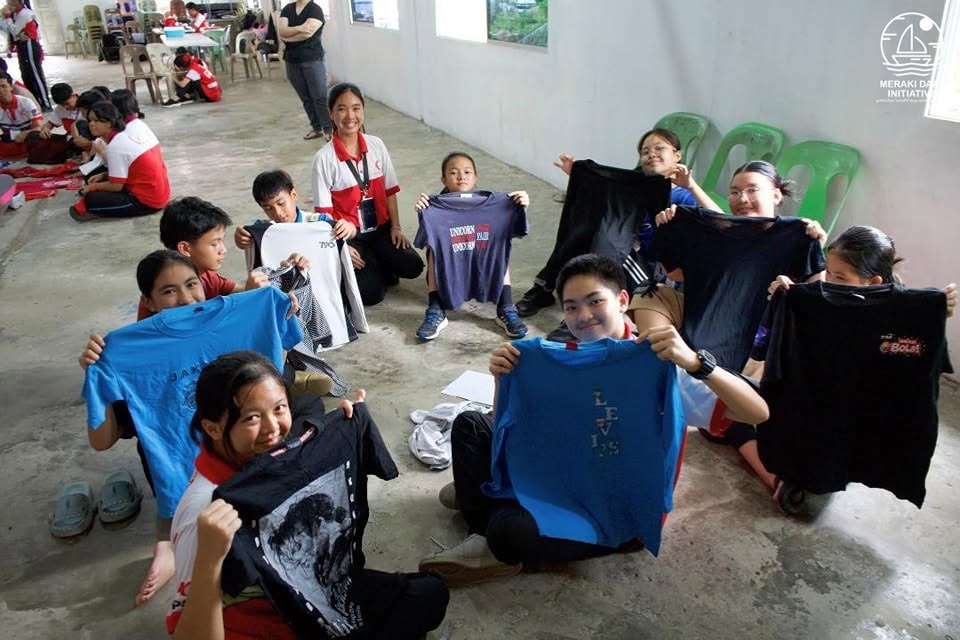
Students from UNITAR, volunteers from USCF, members of the public who simply turned up, and our own team cast, cut, strung and carried every piece.
Over five days 1,884 people walked through it. Friday was the heaviest, 668 visitors, with 376 of them arriving between late afternoon and night. Our crew logged visitors from Australia, China, Pakistan, Korea, Spain, Japan, Denmark, Russia and India, among others. For most of them it was the first time they had stood inside something built from the rubbish that washes up on Sabah's shores.
This activity has ended — kept here as a record of our work.
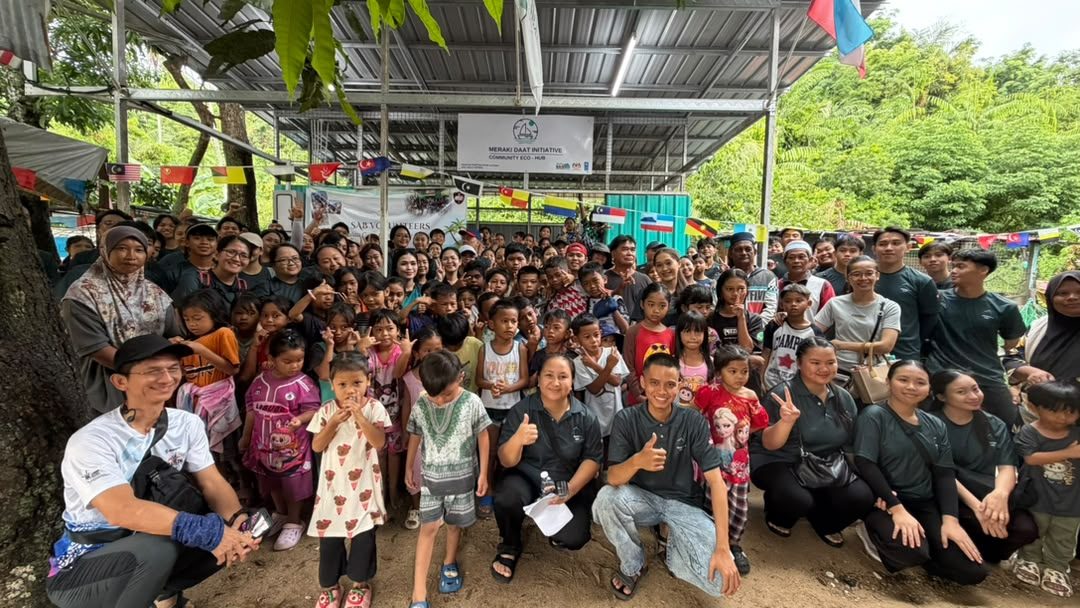
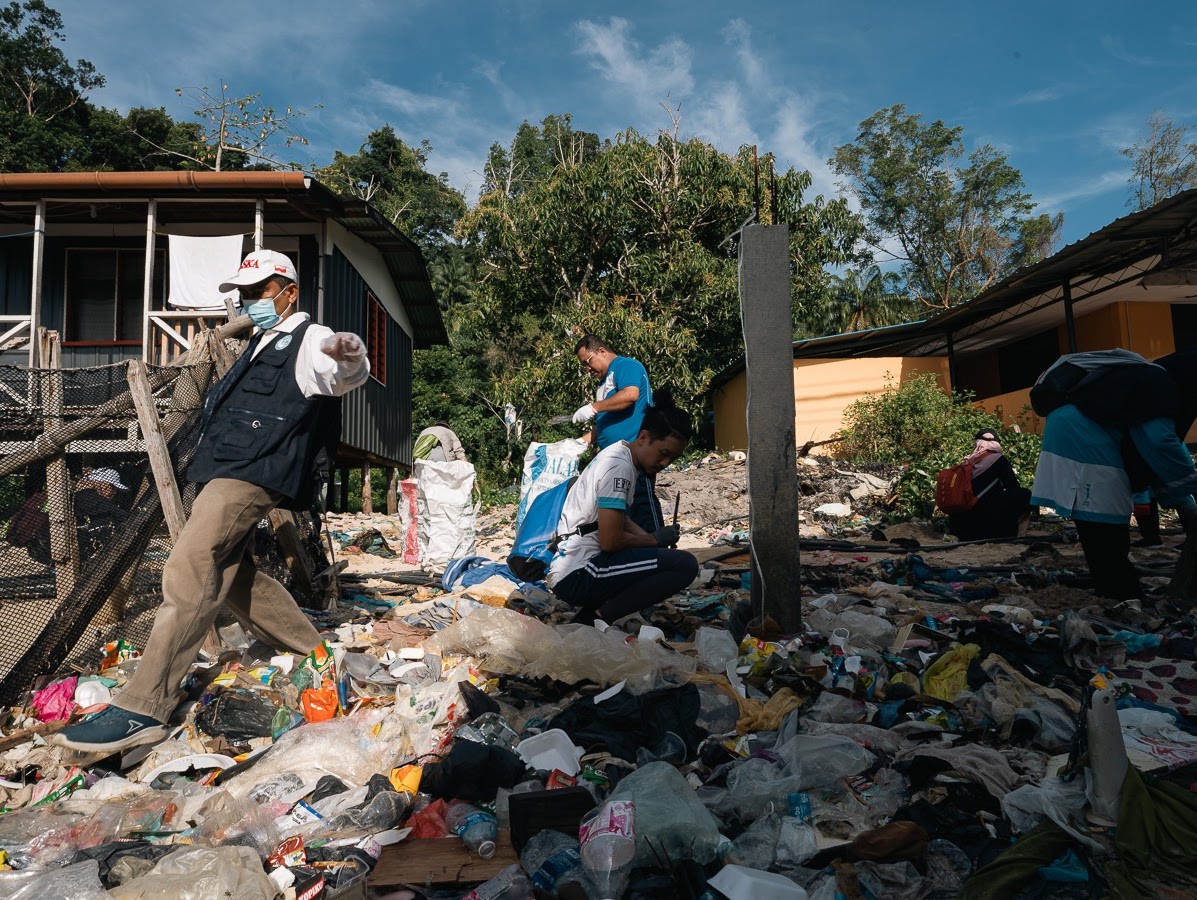
On 16 September 2026, Malaysia Day, volunteers boarded boats for Pulau Gaya. The morning was organised by Jabatan Belia PUHUS together with Adventist Community Services, and we joined them as a partner.
It began at eight with introductions on the island, then simple English lessons and games with the children. By mid-morning the whole group had moved on to a gotong-royong, working along the shoreline and between the houses, filling sacks with the plastic that collects there. Alongside it ran a free haircut service, set up on plastic chairs in the open air, which stayed busy for hours.
The morning closed the way these things should, with a game of giant volleyball on the painted court and far more people watching than playing.
Days like this are not clean-ups with extras attached. The haircuts and the lessons are the point as much as the sacks are. A community that is only ever visited by people collecting rubbish learns that it is a rubbish problem. One that is visited by people who also cut hair, teach, and play volleyball learns something else.
This activity has ended — kept here as a record of our work.
Looking for a meaningful way to explore Sabah's stunning islands? Our Dive & Build program offers a full-day eco-tourism experience that blends marine conservation, cultural immersion, and hands-on learning — all in one unforgettable journey.
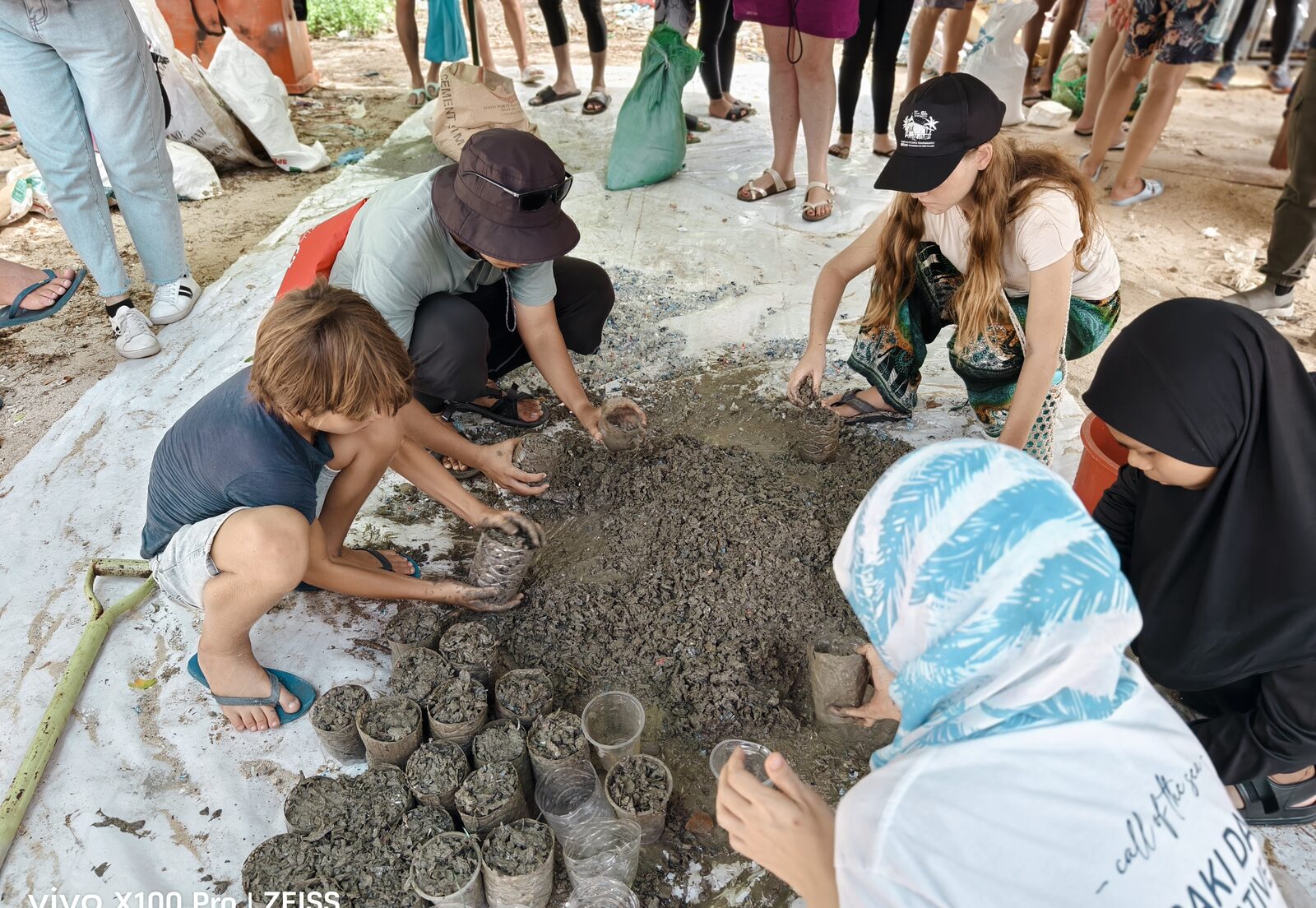
Your day begins with an ocean clean-up — either underwater for certified divers or a shoreline clean-up for non-divers. Together, we collect marine debris that would otherwise pollute our beautiful seas. Next, roll up your sleeves for our eco-brick making workshop, where you'll learn how to convert the collected plastic into usable eco-bricks. It's a rewarding, hands-on activity that shows just how powerful upcycling can be.
After working up an appetite, enjoy a scrumptious lunch, prepared by the community. Then, spend the afternoon engaging with the Bajau Laut (Sea Gypsies) — one of Sabah's most iconic seafaring communities. Join in their traditional folk games or a fun game of beach volleyball, hear their stories, and immerse yourself in a way of life that's slowly fading.
This is more than just a tour — it's a chance to give back, connect deeply with nature and people, and see how tourism can be a force for good. Let's turn pollution into purpose — one island at a time.
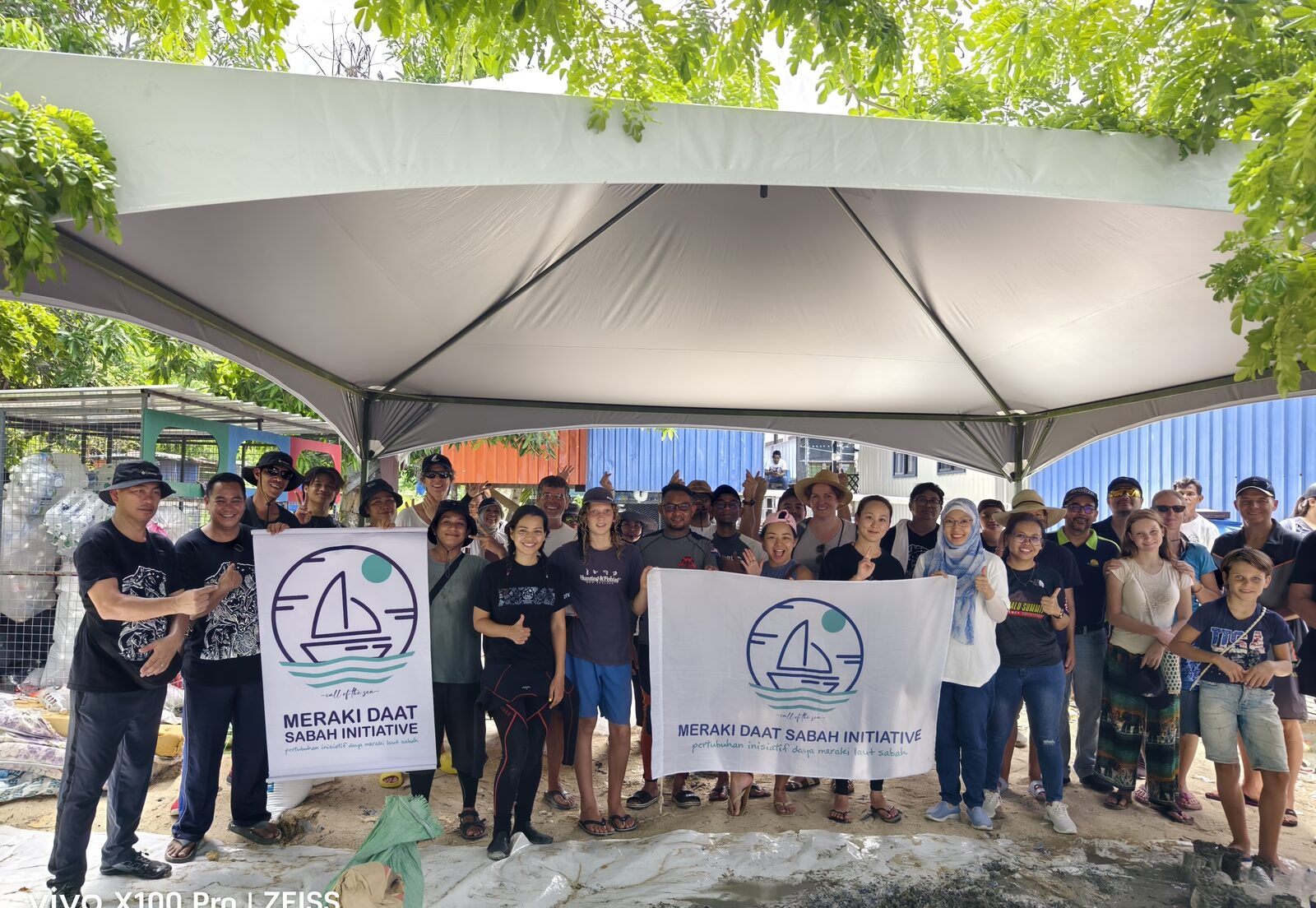
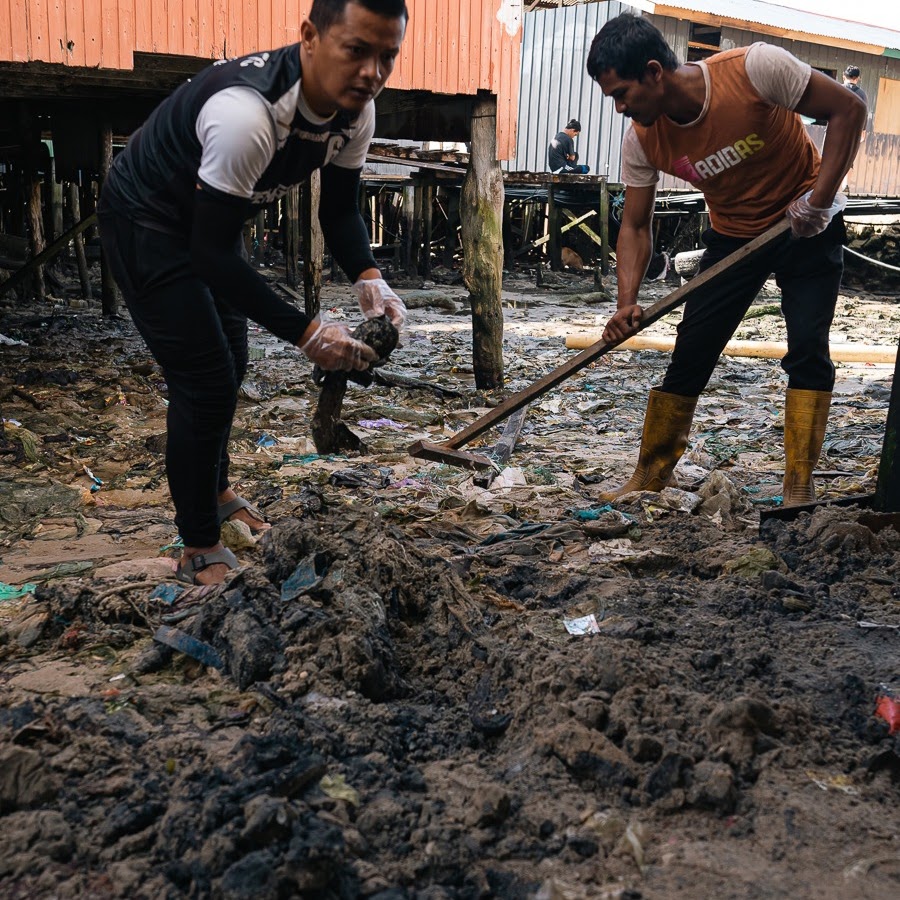
Book This ExperienceClean-up drives are the most direct way to join our work. They run through the year on the shorelines of Gaya Island, sized to whoever turns up — a school group, a company team, a yacht crew passing through, or villagers working their own stretch of coast.
The scale has been significant. Our first Mega Island Clean-Up on 19 March 2023 drew over 200 volunteers and cleared 12 tonnes of waste in a single morning. A second drive added 2.6 tonnes. Across all clean-ups we have removed more than 20 tonnes from the island.
What separates these from a typical beach clean-up is what happens next. Collected plastic is sorted on site and fed into our eco-brick production rather than shipped to a landfill, which means volunteers can see the material they picked up become a paving block or a footpath.
Groups are welcome. Get in touch and we will match a date, arrange boat transport, and brief your team on what to expect.
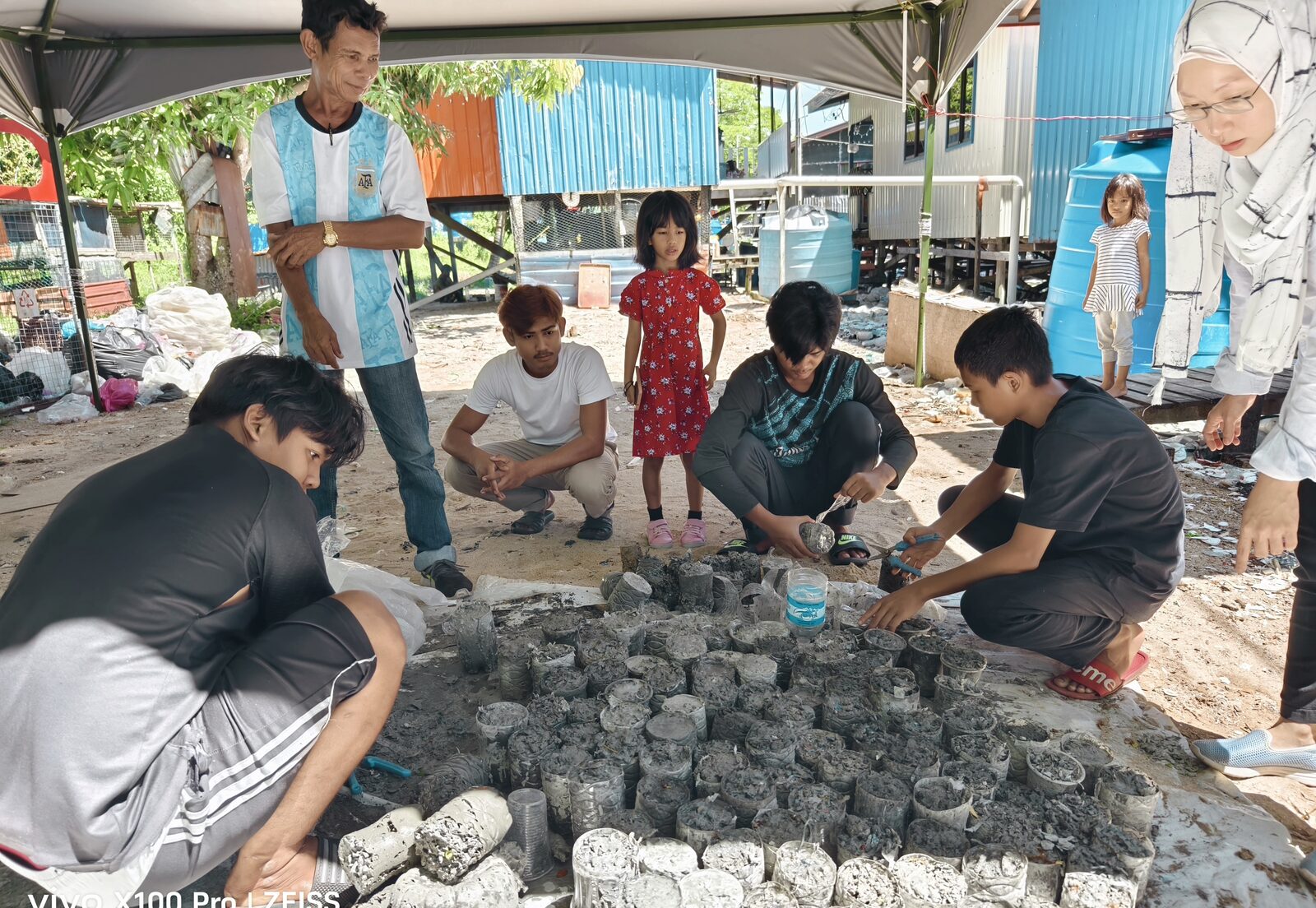
Arrange a Clean-UpThe workshop takes the plastic pulled off the shoreline and turns it into something with a use. Participants sort the waste, shred it, mix it with cement, and press the result into eco-bricks — the same blocks now used for paving and construction in the villages.
Sessions grew out of Unwrapping Plastics Kota Kinabalu, a project funded by the US Embassy under DBKK's Love KK Campaign, which introduced segregation at source to the island. In 2023 the finalists of Miss International Malaysia joined a community recycling workshop, and school and corporate groups have run sessions since.
Village youth lead most workshops now. That is deliberate: the skill stays on the island rather than arriving with visitors and leaving with them.
Workshops can run on Gaya Island or at your own venue in Kota Kinabalu.
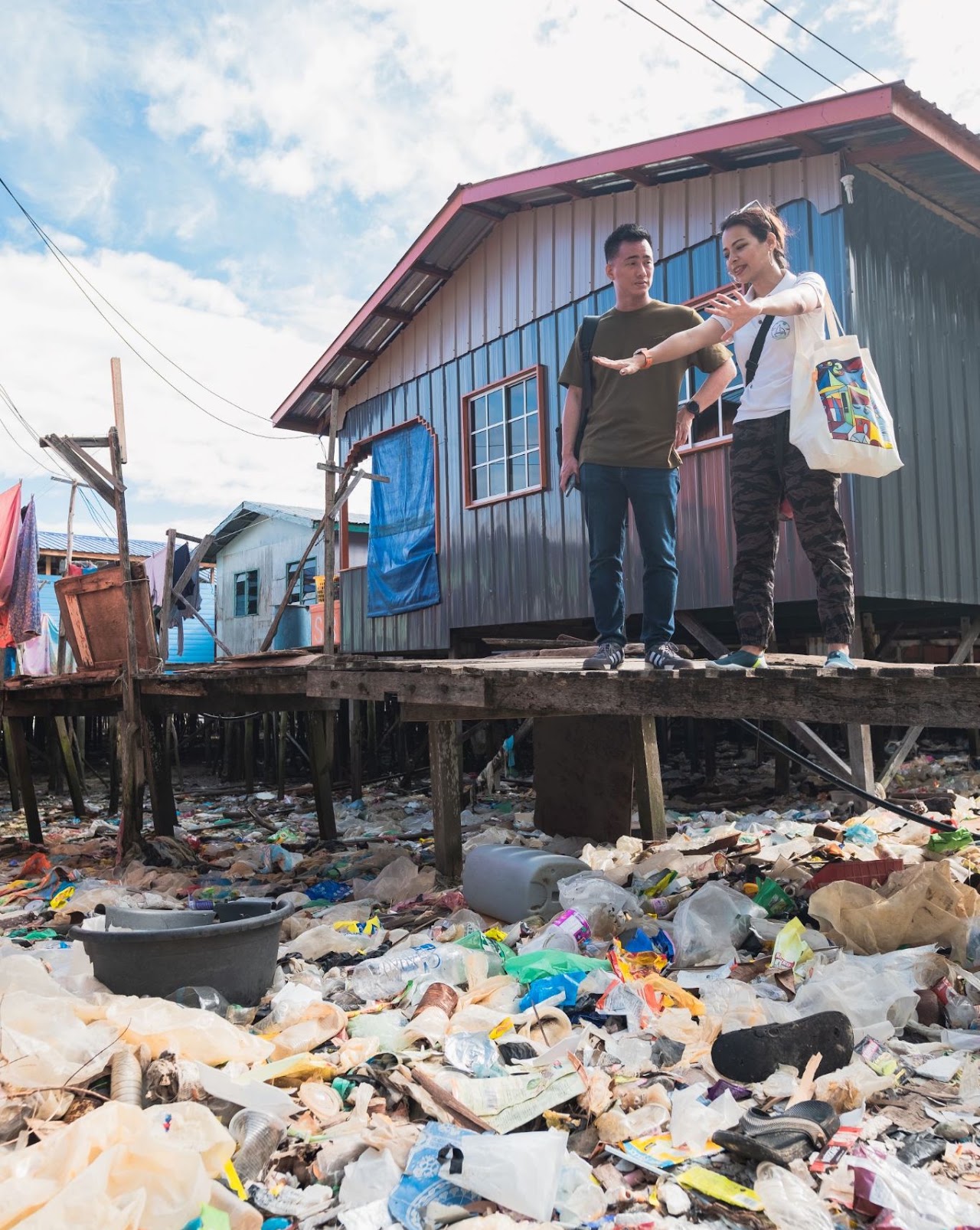
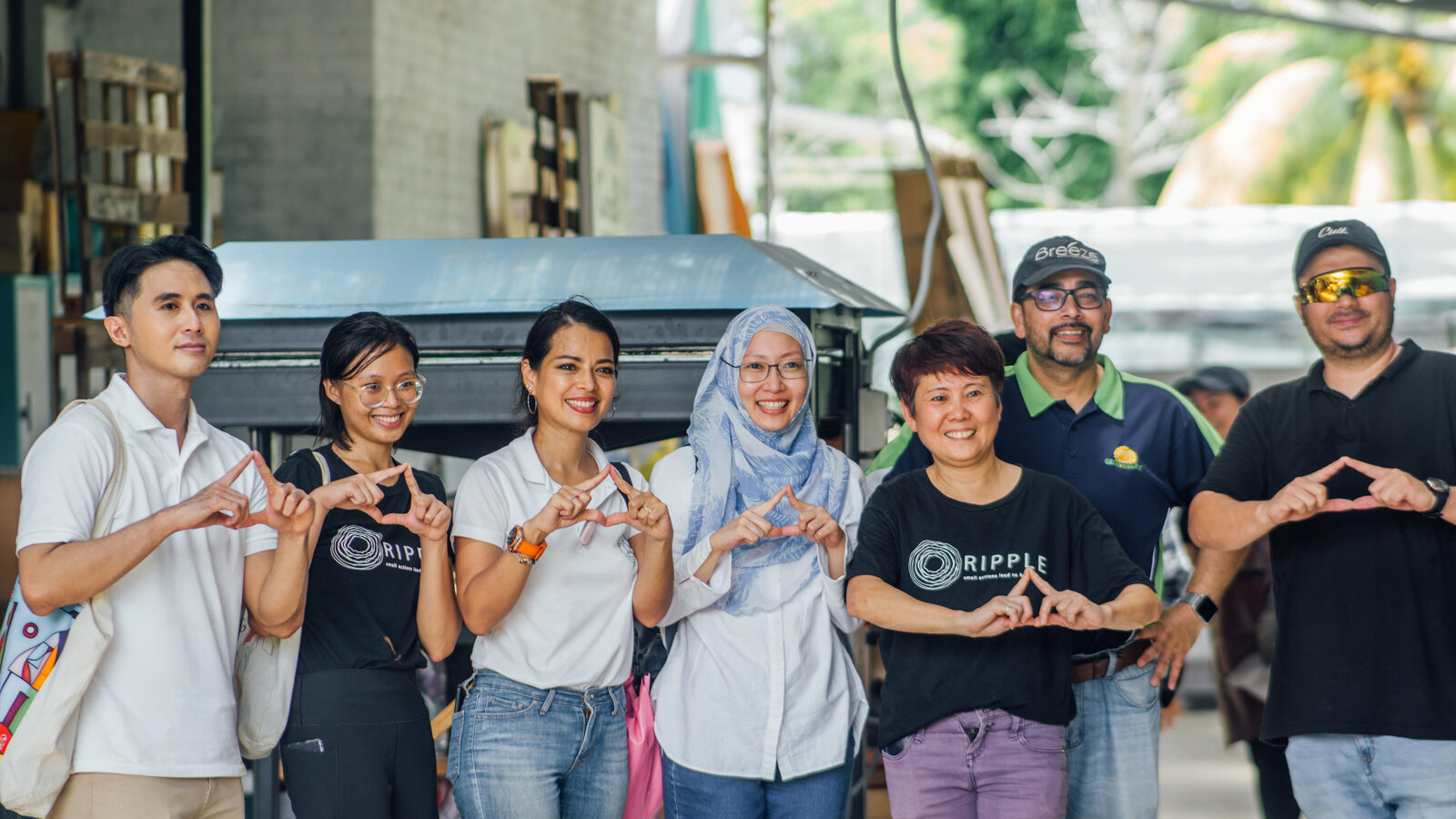
Request a WorkshopIn a collaborative effort, the Meraki Daat Sabah Initiative and the Global Institute for Tomorrow (GIFT) embarked on an insightful journey to Gaya Island — a gem in the heart of Sabah that faces environmental challenges demanding immediate attention and sustainable solutions.
GIFT, a pan-Asian think tank known for leadership programs that tackle real-world issues, brings a wealth of knowledge and innovative problem-solving to the table. As the two organizations walked through the village, the stark reality of environmental degradation juxtaposed against the natural beauty of Gaya Island became evident — the community's struggle with waste, exacerbated by inadequate disposal systems and the influx of refuse from other areas, highlighted the need for a comprehensive approach to waste management.
The collaboration is a beacon of hope, signaling a move towards integrating local wisdom with global expertise. The visit served as a catalyst for developing sustainable business models that can support the community's economy while preserving the environment — and the team supported local boatmen by using their boats as the main mode of transportation.
The visiting delegation included GIFT Project Coordinator Haziq, Lobong Village Chief Tn Rajit, Meraki Daat Legal Officer Dominic, Meraki Daat Charter President Michelle, and GIFT Program Manager Sean.
This activity has ended — kept here as a record of our work.
The inaugural Dive and Dine Fundraiser for Project Picasso — in collaboration with Sail Malaysia, Marine Research Foundation, and Pillars of Sabah — raised a total of RM3,769.00.
The funds are being utilized for the continued works of Phase 1 of Project Picasso at Kampung Lobong, Gaya Island. This phase involves implementing segregation at source, eliminating waste from the island, promoting recycling, and establishing a circular economy — with the ultimate goal of transforming the village into an eco-tourism gem, the first of its kind in Kota Kinabalu.
We were thrilled to partner with Pillars of Sabah for the evening's auction, showcasing the exceptional talent of our local community. We continue to raise funds through the sale of our art pieces, smart reusable bags and other events — stay tuned on our website and social media pages.
Thank you for your support and generosity.
This activity has ended — kept here as a record of our work.
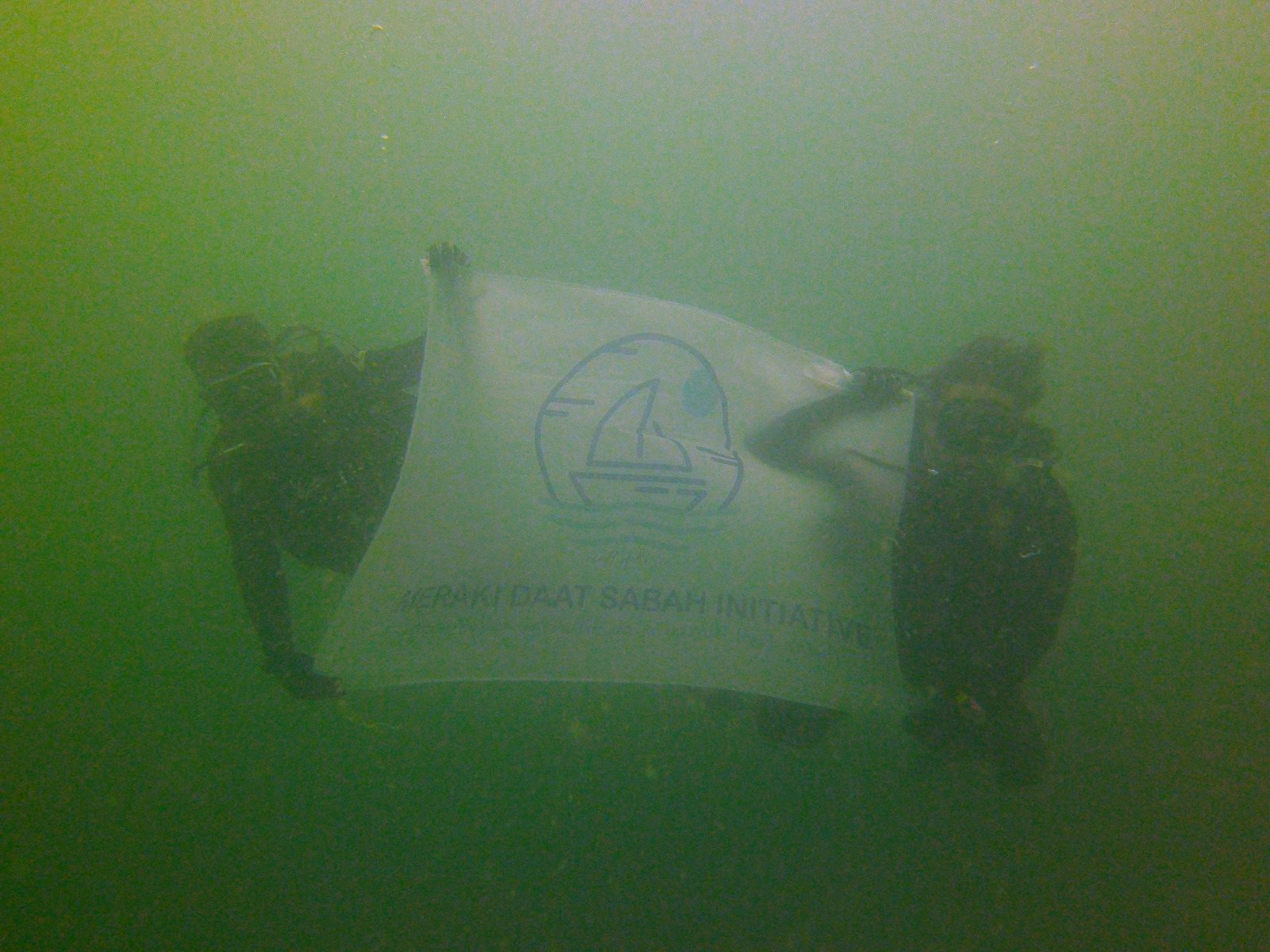
A shoreline can look clean and still sit above a seabed full of rubbish. Heavier waste — bottles, nets, bags weighed down with silt — never washes back up. It sinks, settles, and smothers whatever is growing underneath.
That is the part our dive team goes after. Certified divers work in pairs across the harbour and reef areas, lifting debris that shoreline volunteers physically cannot reach. Visibility is often poor and the work is slow, which is exactly why it rarely gets done by anyone.
Discarded fishing net is the priority. Left in place it keeps catching fish, crabs and turtles for years — a trap that nobody is tending. Removing it stops a cycle rather than tidying a symptom.
Everything recovered joins the same stream as our shoreline collections: sorted, and where possible shredded and pressed into eco-bricks for village pathways.
This activity has ended — kept here as a record of our work.
Our work is not limited to Sabah. In Langkawi we spent the day on the shoreline in Kedah, clearing plastic by hand and filling sacks the same way we do at home.
What washes up in Kedah comes from the same sea as what washes up on Gaya. The brands on the wrappers change. The problem does not.
Clean-ups like this are how the work travels. Every stretch of coast has people willing to spend a day bent over a beach, and every one of them makes the next stretch easier.
This activity has ended — kept here as a record of our work.
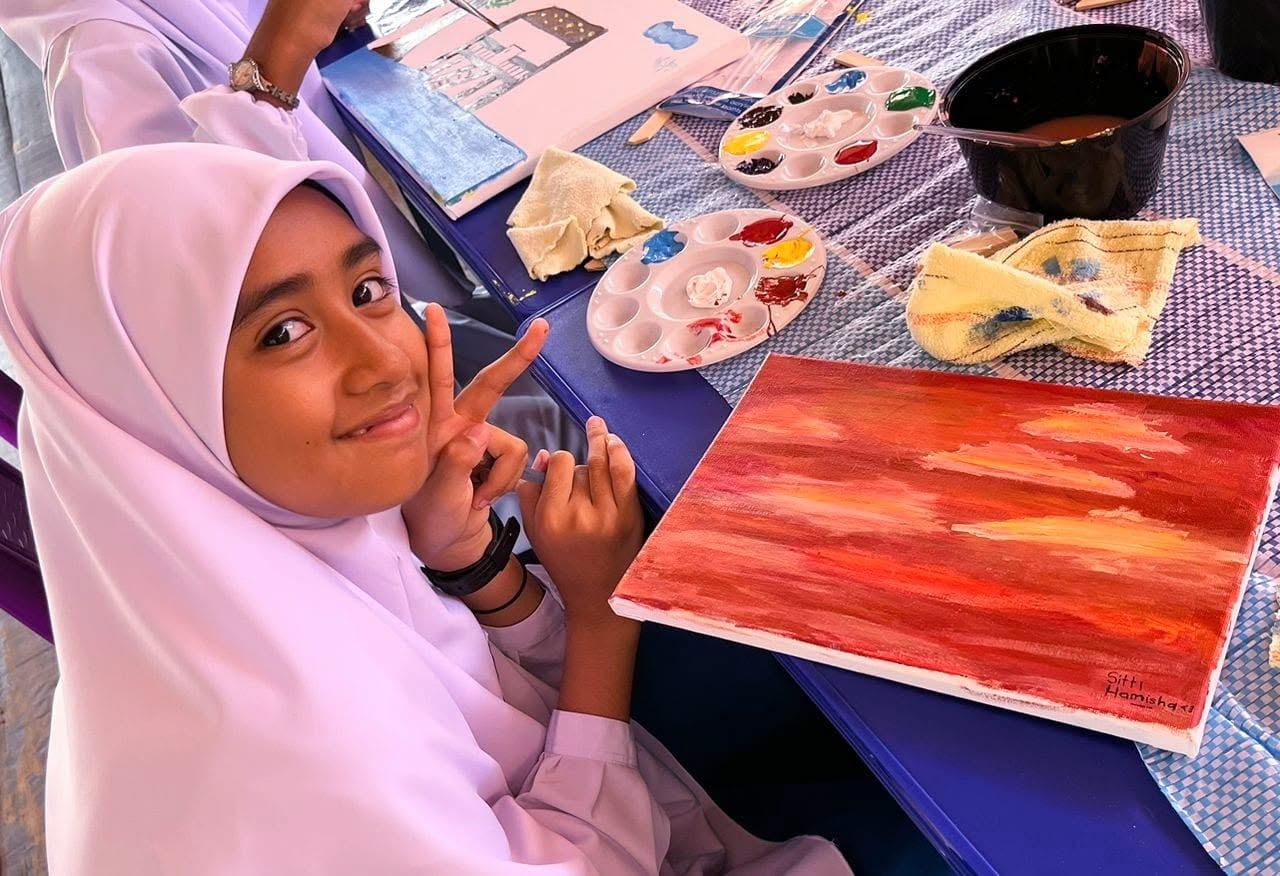
Meraki Daat Sabah Initiative joined hands with Pillars of Sabah, Sail Malaysia, and the Sabah Education Department for a community art activity at SMK Gaya Island - a key moment in the Project Picasso Fundraiser Campaign. The two-hour session gathered 15 students, 4 teachers, 10 villagers from Kampung Lobong, 3 sailors from around the world, and the Meraki Daat Executive Comittee in a vibrant collaboration.
Facilitated by Pillars Sabah President, Jared Abdul Rahman and his team, the activity intertwined artistic expression with a deep respect for the environment, while also fostering cultural exchange. A total of 27 acrylic art pieces of various sizes were created and will be auctioned online at the upcoming dinner. Funds raised will purchase a recycling machine to be placed on the island, kickstarting a community-led recycling programme and covering its first three months - an essential move toward a sustainable circular economy.
This forms the first phase of Project Picasso, which aims to keep the island's coastline clean and raise awareness about conservation through paper waste management.It follows the recently concluded Unwrapping Plastic KK project, which educated 5 schools and 2 water villages on plastic and recycling.
'Not only did everyone have an amazing time with art, but there was also a beautiful exchange of culture', said Meraki Daat President Michelle de La Harpe. Pillars of Sabah President, Jared Abdul Rahman added, 'It was truly inspiring to see school children and community come together to produce art for the cause', 'This is a small step and an important step to get close to the community', James Khoo, MD of Pangkor Marine'.
This activity has ended — kept here as a record of our work.